
We're Your
Zion Experts!

We’re a husband-and-wife team who have spent years exploring Zion National Park. From navigating shuttle lines and seasonal closures to finding quiet trails and wildlife, our knowledge comes from firsthand time in the park.
Now, we use that experience to help adventurers plan smarter, avoid common pitfalls, and experience Zion with confidence—whether it’s a first visit or a return trip.

- 📝 One-Day, Three-Day and Six-Day Itineraries
- 📖 Available in Print and Digital Formats
- 🥾 Top Hikes with Permit Details
- 🚌 A full guide for parking and riding the shuttles in Zion Canyon
- 🌄 Full Walkthroughs for Kolob Terrace, Kolob Canyons and East Zion
- 📸 Gorgeous Photography so you know what to expect when you get to Zion
- 🦌 Best Places to Spot Wildlife
- 📍 Guides for Cedar Breaks, Kanab and Kanarra Falls
Ultimate Guide to Hiking the Narrows in Zion National Park
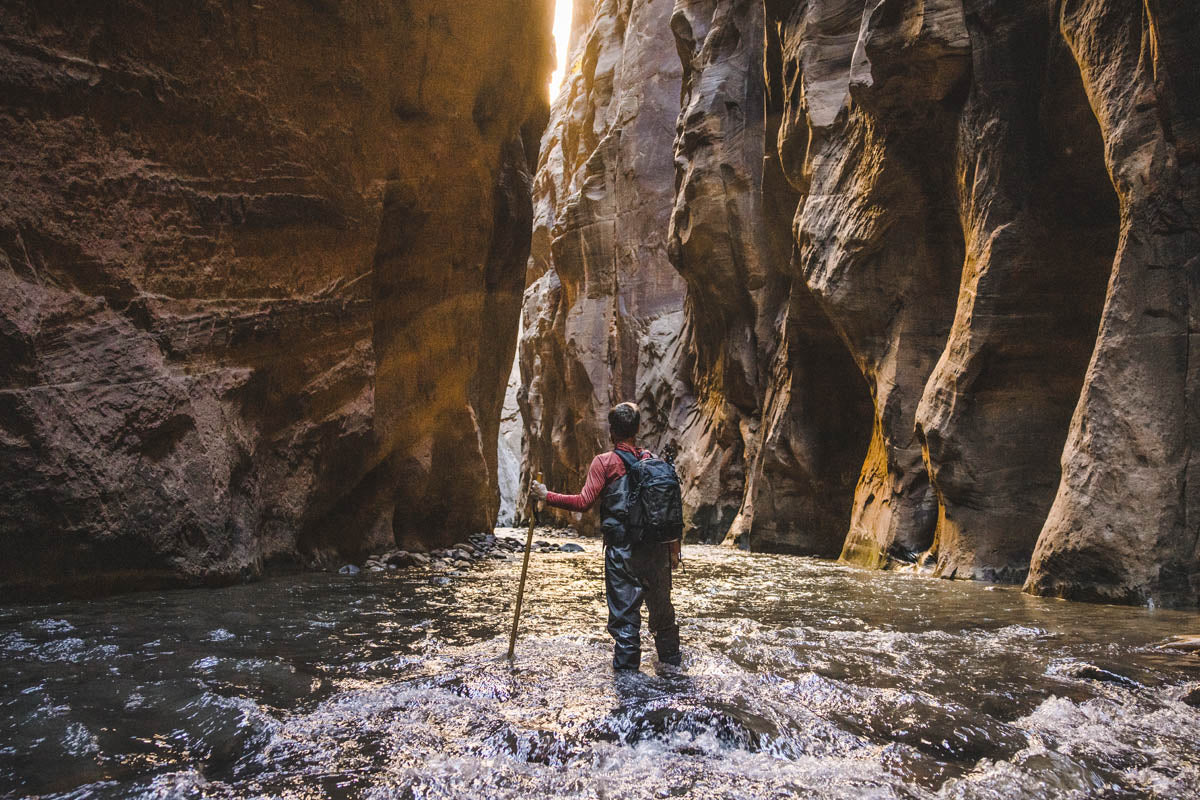
Hiking the Narrows is one of the most iconic experiences in Zion National Park.
Instead of following a traditional hiking trail, adventurers move directly through the Virgin River as 1000-foot, sandstone canyon walls close in on both sides. The scenery is incredible, the environment is constantly changing, and the experience is unlike anything else in Zion.
While Angel’s Landing often gets the headlines, the Narrows is the hike that defined Zion. It is scenic, immersive, and flexible—challenging for those who want to push farther upstream, yet accessible to nearly anyone willing to get their feet wet. With the right preparation, it is one of the most rewarding hikes in the Southwest.
Preparing for the Narrows
Preparation for the Narrows depends entirely on how far you plan to hike. Visitors who only want to walk a few hundred feet into the river need very little planning. Those aiming to reach landmarks like Floating Rock or Wall Street should take a more deliberate approach.
Gear will be addressed later in the article, but these are a few considerations you should make before heading to the trailhead.

Do You Need a Permit to Hike the Narrows?
The short answer is "no", but there is an exceptions. No permit is required for a standard day hike starting at the Temple of Sinawava. Permits are only required for the 15-mile top-down route or for overnight trips. For most visitors, the bottom-up hike described here is permit-free.
When is the Narrows Closed?
- The Narrows is highly sensitive to water levels and weather. Snowmelt typically causes seasonal closures in spring, often beginning in mid-April. The duration varies year to year and can last anywhere from a couple of weeks to several months.
- Summer monsoon season, which generally runs from July through September, can also trigger closures due to flash flood risk. Conditions can change quickly, so checking Zion’s official current conditions page is essential before committing to the hike.
Water and Food
While many people assume they can just bring a filter for quick access to water, that isn't the case in the Narrows. Drinking water must be packed in. The Virgin River is known to contain toxic algal blooms, and the algae cannot be filtered out. There is no safe way to treat river water on the trail.
- Water refill stations are available at the Zion Canyon Visitor Center and at the Temple of Sinawava, which also has the last restroom before the hike begins.
- Snacks are equally important. Simple, calorie-dense foods work best, but anything brought along should be stored in a waterproof container. Even shallow water crossings can soak an unprotected pack.
Temperature and Weather Awareness
Despite Zion’s desert setting, the Narrows receives limited sunlight and can feel surprisingly cold. Canyon temperatures are often much lower than conditions elsewhere in the park, especially in the morning.
Checking the weather forecast is critical. Rain anywhere in the watershed can cause flash flooding, even if skies are clear overhead. Zion posts warning signs throughout the park, but personal responsibility matters most—if storms are forecast, it’s best to change plans.

Crowds in the Narrows
Crowds in the Narrows can be significant, especially during peak season. Timing makes all the difference.
Early starts dramatically improve the experience. Boarding the first shuttle of the day allows hikers to reach the river before most visitors arrive. The farther upstream you go, the thinner the crowds become.
Late mornings and afternoons see a sharp increase in foot traffic, particularly near the river entrance. While the Narrows never feels like a sidewalk, returning downstream during peak hours can be slow and congested.

Getting to the Narrows
The Narrows begins at the Temple of Sinewava, which sits the end of Zion Canyon Scenic Drive. From March through November, private vehicles are not allowed on this road, and visitors must use the Zion Canyon Shuttle.
During winter months, private vehicles can access the trailhead, but that also means hiking the Narrows in cold conditions.
For most visitors, the route is straightforward: take the shuttle to Stop #9, Temple of Sinawava, which serves as the trailhead.
From there, hikers follow the Riverside Walk, a paved one-mile trail along the Virgin River. This walk gradually narrows the canyon and offers a preview of what lies ahead. The Narrows officially begins where the pavement ends and the river takes over.

Gear for the Narrows
Gear requirements vary by season and personal preference, but there are a few main items to consider. Of course, most adventurers start with the same questions...
Do I Need to Rent Gear for the Narrows?
It depends, in the warmer months, getting wet may be comfortable. In cooler months, full waders help retain warmth and reduce fatigue. Neoprene socks are a good compromise for those not renting full gear. Neoprene socks won't keep your feet dry in the Narrows, but they will help keep your feet warm.
Water Temperatures in the Virgin River
Summer: roughly 50–70°F
Spring/Fall: roughly 41–53°F
Winter: high 30s°F
Most gear rentals include a thick and sturdy walking stick. A solid walking stick will help you keep your balance while you're fighting the current. Rental sticks are also thicker than trekking poles and less likely to wedge between rocks.
Rentals typically range from $30–40 for boots and a stick, and $50–60 for full packages with waders. While optional, many hikers find the added comfort and safety worth the price.

Footwear in the Narrows
The riverbed is rocky and uneven. Canyoneering boots or sturdy hiking boots provide the best support and protection. Sandals will leave your feet exposed to the rocks, and I've met a lot of people that hurt their feet wearing sandals, not recommended.
Hikers can find neoprene socks at outdoor stores in Springdale and St. George. Desert Rat (St. George) and Zion Adventures (Springdale) normally have them in stock.
Hiking the Narrows
The Narrows is as easy—or as difficult—as you make it.
The out-and-back format allows hikers to turn around at any point, making it suitable for a wide range of abilities. That said, hiking in moving water is significantly more demanding than hiking on dry ground.
The Virgin River's current is constant, footing is uneven, and progress is slower. Depth varies, and some sections may require lifting packs overhead or turning back altogether.
Hiking two miles in the Narrows feels much harder than five miles on a traditional trail. For most adventurers, the best strategy is to pick a landmark along the river to serve as a turnaround point. Luckily, several natural landmarks serve as popular turnaround points:
-
Mystery Canyon Falls – This is a small, thin waterfall that spills over the canyon wall on the east side of the river. The waterfall is less than 0.5 miles past the entrance to the Narrows.

-
Wall Street – Wall Street is where the canyon walls begin to tighten. This section is 1.4 miles into the trail, and it's one of the most picturesque areas in the Narrows.

-
Floating Rock – Floating Rock is two miles into the Narrows, and it sits in the heart of Wall Street. This massive boulder sits in the middle of the Virgin River, creating the perfect photo opportunity.

-
Big Springs - Big Springs is the final landmark for day hikers. This little spring seems to flow right out of the canyon wall, with a couple cascades that make for a nice picture. The water from Big Spring can also be filtered.

Zion and the Narrows
Hiking the Narrows is one of those rare experiences that lives up to its reputation, but Zion is full of adventure. Check out our Zion Travel Guide to get the most out of your trip. Our guide includes shuttle strategies, seasonal planning, gear guidance, and detailed hiking breakdowns. Plus, we include One-Day, Three-Day and Six-Day Itineraries, so you can focus on the experience instead of the logistics.